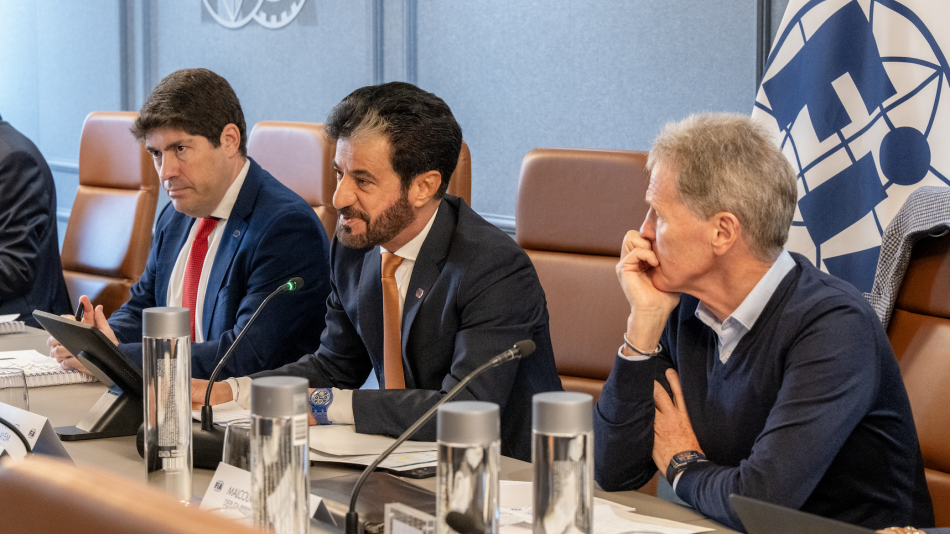


The Federation Internationale de l’Automobile (FIA), the global governing body for motor sport and the federation for mobility organisations worldwide, announces the decisions of the World Motor Sport Council, which held its Autumn meeting today, 19 October 2026. The World Motor Sport Council met via videoconference with the FIA President and several Council Members joining from the FIA offices in Knightsbridge, London.
World Motor Sport Council approved a series of measures to usher in a new era for the FIA’s rally and closed-road championships. In the FIA World Rally Championship final details have been approved ahead of the introduction of the WRC27 regulations, including championship participation, category structures and points allocation.
A new grassroots Rally 6 category has also been created at the base of the rally pyramid to provide a new affordable and accessible pathway into rallying while Cross Country rally will benefit from significant technical evolution, including a new generation of vehicles approved by World Council today.
Mohammed Ben Sulayem, President of the FIA, opened the meeting by saying: “When we last met we discussed our ambitions for the future of motor sport, the challenges facing our championships, and the importance of building a stronger, more sustainable FIA. Today, just a few months later, I am proud to say that we are turning that vision into reality. We have continued our mission to secure the future of our championships and through our Global Karting Plan and the FIA Arrive and Drive programme, we are making international competition more accessible and more affordable.
“We must continue our work to reinforce our championships, improve safety, encourage innovation, attract new manufacturers and make motor sport more accessible. And, we must never lose sight of our responsibility to our Member Clubs, our competitors and the millions of people around the world who share our passion for motor sport.”
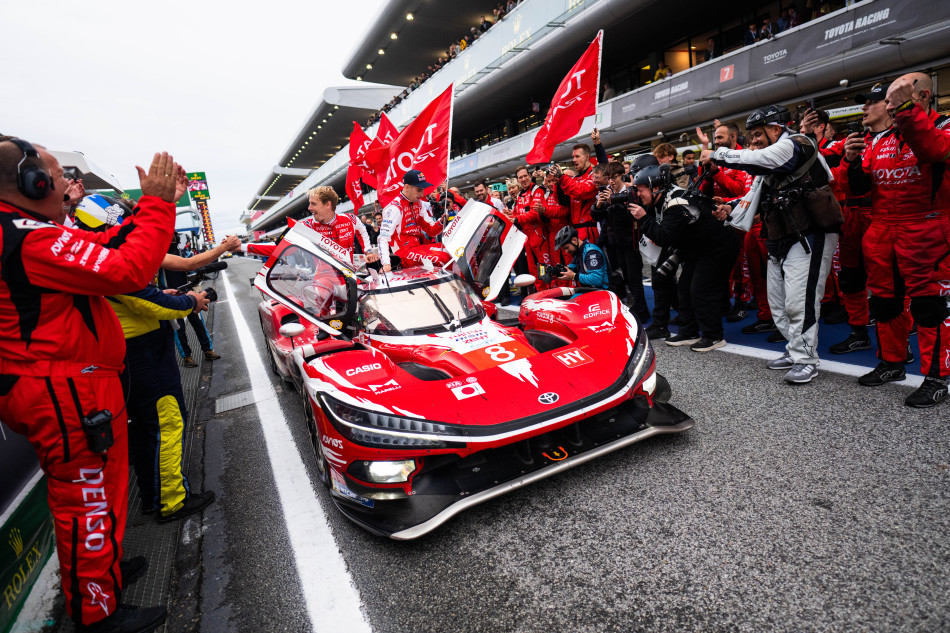
The World Motor Sport Council welcomed a series of landmark agreements designed to secure the long-term growth and success of the FIA’s World Championships. Last month it was announced that a historic 10-year agreement had been reached for the FIA World Endurance Championship with enhanced FIA branding and a requirement for all regulatory processes to receive World Motor Sport Council Approval.
Meanwhile, in July, the ‘Deal of the Century’ was stuck to significantly invest in and grow the World Rally Championship as a new commercial rights agreement was announced. Together, these latest agreements complete a set of four long-term agreements secured for FIA World Championships since July 2025.
The President also recognised the ongoing FIA Volunteers and Officials Month, which unites the global motor sport community in celebrating the dedication, commitment and professionalism of the individuals who make racing and rallying possible around the world. Now in its second edition, the initiative shines a spotlight on the many roles that underpin our sport, from marshals and stewards to race directors and medical crews. It also encourages those interested in getting involved to contact their Member Club (ASN) and begin their journey as a volunteer or official.
The following is a summary of decisions taken at today’s World Motor Sport Council meeting:
FIA World Rally Championship Ready for WRC27

The FIA World Motor Sport Council has approved further provisions for the 2027 FIA World Rally Championship Sporting Regulations, marking a major milestone in the introduction of the FIA’s new regulatory framework for the championship. The latest approvals establish key elements of how the championship will be contested from 2027, including championship participation, category structures and points allocation.
The new regulations formally establish the Rally1 category, which will comprise both new specification ‘WRC Cars’ built to the WRC27 technical regulations and ‘WRC Kit Cars’, based on existing Rally2 machinery fitted with an approved aerodynamic upgrade kit comprising new front fenders, a front bumper and a rear aerodynamic device. Both specifications will compete within the same top category of the championship from 2027.
Alongside the introduction of the new Rally1 category, a revised championship structure will also come into effect from 2027. The Manufacturers’ Championship will be replaced by a new Constructors’ Championship, opening the title to both traditional automotive manufacturers and independent tuners competing under the same classification. To be eligible to claim the Constructors’ Championship title, Constructors will be required to participate in every round of the season.
A new WRC Teams’ Championship will also be established, contested over seven nominated events, including a compulsory overseas round and the final event of the season to be eligible for the championship title. Both the Constructors’ and WRC Teams’ Championships will be open exclusively to cars competing in the Rally1 category.
The championship will also retain its support categories for drivers, with WRC2, WRC3 and the WRC Masters Cup continuing in 2027.
In addition, the maximum turbo restrictor diameter for both new specification Rally1 Cars and WRC Kit Cars will increase from 32mm to 33mm, providing increased engine performance across both specifications competing in the Rally1 category.

The approved provisions also allow the FIA to introduce technical or sporting measures where necessary to maintain appropriate performance differentiation between vehicle classes. This flexibility will support the transition to the new regulations during the 2027 and 2028 seasons, ensuring the championship’s top category remains competitive as new specification Rally1 Cars and upgraded WRC Kit Cars compete alongside one another.
Grassroots ‘Rally 6’ Category Added to Rally Pyramid

The FIA has introduced new homologation and technical regulations for Rally6 cars, establishing a new FIA-homologated entry point within the global rally pyramid.
With an estimated cost of between €35,000 and €47,000, the new Rally6 category has been developed to significantly reduce the cost of entering competitive rallying, providing drivers with limited budgets an affordable and accessible pathway into the sport. Largely derived from the FFSA’s FR6 regulations, the new Rally6 framework builds on the experience gained through the category’s implementation in France.
The new two-wheel-drive cars will be based on production four-seater vehicles, powered by either a standard 1.6-litre turbocharged or 2.0-litre naturally aspirated engine, producing a weight-to-power ratio of 7.5 kg/hp (i.e. 140 hp for 1,050 kg).
To keep both purchase and running costs low, the regulations will utilise production-derived components, including brakes and tyres, alongside conventional H-pattern gearboxes and non-adjustable competition shock absorbers, while maintaining safety standards equivalent to Rally5-Kit cars.
The introduction of Rally6 represents a significant step in the FIA’s commitment to reducing financial barriers to participation, strengthening grassroots motor sport and providing a clear development pathway for the next generation of rally competitors around the world.
The FIA Regional Rally Championships will also undergo their most extensive sporting regulation updates in nearly a decade, following dedicated consultations with Clubs involved. The revisions aim to simplify and harmonise regulations across the championships, bringing them in line with current operational practices.
Organisational requirements will also be simplified, while FIA branding will be further strengthened across regional rallying. Organisers will now be required to adopt updated FIA Regional Rally Championships brand guidelines, including new championship logos featuring greater FIA prominence.
FIA Karting Introduces Measures to Reduce Costs and Protect Drivers’ School Education

A series of regulations have been approved by World Motor Sport Council to reduce the cost of competing in karting and safeguard the school education of young drivers. By implementing a standard four-day limit to the length of karting events on the International Sporting Calendar, the FIA is acting to reduce the overall cost of competing whilst minimising the disruption to the education of young drivers.
There is an exemption to this restriction to allow ‘annual finals’ where drivers have qualified during a previous series of events to run over more than four days.
To further reduce the associated costs of competition whilst supporting sustainability and waste reduction in the sport, drivers will now be limited to three sets of tyres across Thursday’s test sessions, free practice on Friday and the warm-up sessions, a reduction of one set to a driver’s allocation over a race weekend in next season’s FIA Karting Championships – OK and Junior. Such a reduction had already been implemented this year in the FIA Karting Championships for gearbox karts.
Finally, the World Motor Sport Council has approved a series of technical and safety regulations covering e-karting. Separate frameworks for high and low voltage e-karts provide clear requirements and guidance to help circuits, operators and officials prepare for events and implement best practice, ensuring the safe operation of e-karting based on the latest research and technical expertise.
Cross-Country Rally Set for Major Technical Evolution Under FIA Long-Term Roadmaps

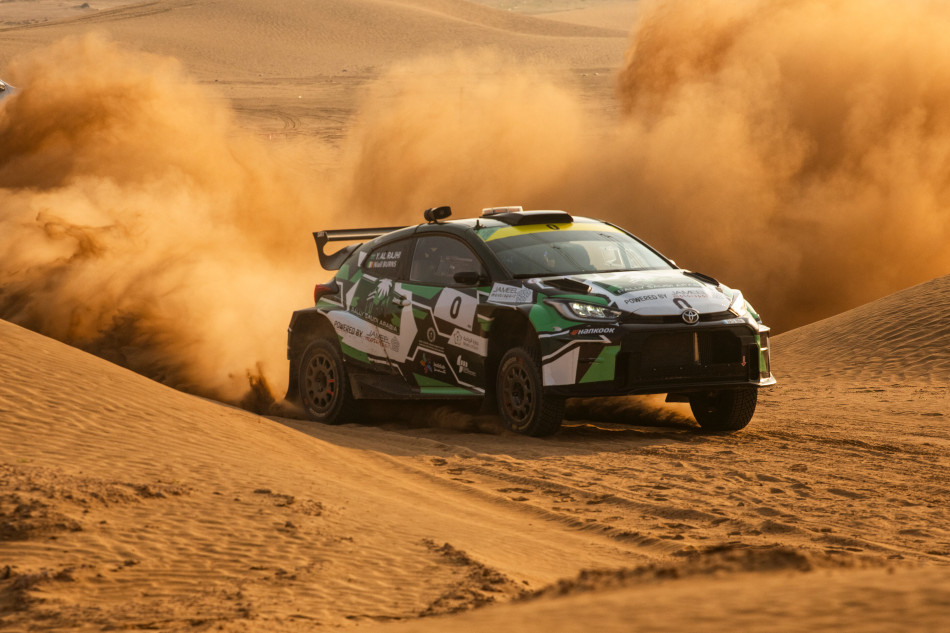
The FIA Cross-Country Rally Championships, including the FIA World Rally-Raid Championship, are set for a significant technical evolution, with the FIA outlining its roadmaps for the next generation of Ultimate and Challenger vehicles, alongside changes to the World Championship’s sporting regulations.
The Ultimate 2030 roadmap establishes a phased introduction of new technical regulations for the discipline’s top category, with a focus on improved safety, long-term cost control and greater flexibility for manufacturers. The new generation of vehicles will feature an enhanced and unique safety cell designed by the FIA, increased protection and space for crews, and provisions for alternative powertrain technologies, while retaining the current four-wheel drive and front-engine concept.
Development and validation of the new chassis design will take place in 2027, informed by an analysis of current vehicles and supported by crash testing. The technical regulations will then be finalised in 2028. The new vehicles will be permitted to compete in the Experimental Group from 2029, ahead of becoming mandatory for factory drivers in the 2030 World Rally-Raid Championship. The regulations will establish a 10-year vehicle lifecycle.
The FIA also outlined its Challenger 2029 roadmap, aimed at reducing costs, improving reliability and strengthening the category’s position as a development pathway towards Ultimate. The new regulations will introduce reinforced safety structures, closed bodywork and a wider choice of engines up to 1,620cc turbo, while implementing measures to control vehicle development and operating costs.
Technical regulations for the new Challenger vehicles are targeted for 2027, with an introduction into the Experimental Group planned for 2028, ahead of eligibility to score championship points from 2029.
In all Cross-Country Rally Championships, FIA branding will be further strengthened through the introduction of FIA logos displayed alongside crew names on competing cars, with gold and silver logos identifying FIA Priority drivers and white or blue logos used for non-priority drivers.
Penalty provisions in Cross Country Events will also be simplified, removing escalating sanctions for repeated infringements making regulations clearer and easier for officials to apply.
New Events Confirmed on 2027 FIA Baja Cups Calendars


World Motor Sport Council has approved the 2027 calendars for the FIA World, European and Middle East Baja Cups, featuring eight, nine and five rounds respectively.
The calendars include two new events, with Sardinia Rally Raid joining the European Baja Cup and Oman International Baja joining the Middle East Baja Cup, highlighting the continued growth of the regional series.
World Motor Sport Council also approved changes to the sporting regulations which will see priority drivers automatically repositioned in the Stage 2 starting order, adopting a system similar to that used in the FIA World Rally-Raid Championship.
Regulatory Updates
FIA Formula One World Championship
The World Motor Sport Council approved a number of amendments to the 2026 and 2027 FIA Formula 1 Regulations. The changes are primarily aimed at improving the regulatory clarity, while further simplifying the application of the sporting, technical and financial regulations.
The World Motor Sport Council also approved the publication of several 2027 regulatory sections, incorporating previously agreed measures which aimed to support the 2027 power unit package, strengthen testing provisions, and introduce new requirements related to the physical and IT segregation of Formula 1 and non-Formula 1 activities in regard to the Financial Regulations.
FIA World Endurance Championship

From the 2027 season, the FIA World Endurance Championship will introduce a revised format for the seasonal LMGT3 Teams’ classification. Under the updated regulations, points scored by both cars entered under the same competitor licence will be combined to determine the final championship classification.
As a result, the FIA Endurance Trophy for LMGT3 Teams will be awarded to the competitor that accumulates the highest total number of points from its two cars across the season.
Currently, each car within a two-car team scored points independently, with championship points attributed separately to each entry according to its race number. The change places the emphasis on overall team performance, with both cars contributing to a single championship campaign.
FIA World Rally-Raid Championship
The FIA World Motor Sport Council approved changes to the World Rally-Raid Championship’s sporting regulations. In each support championship, the four best results from the five events will now count towards the final classification, while every result will continue to count towards the World Championships. The Teams Championship will also be expanded to include teams competing with Ultimate vehicles.
FIA Historic Commission
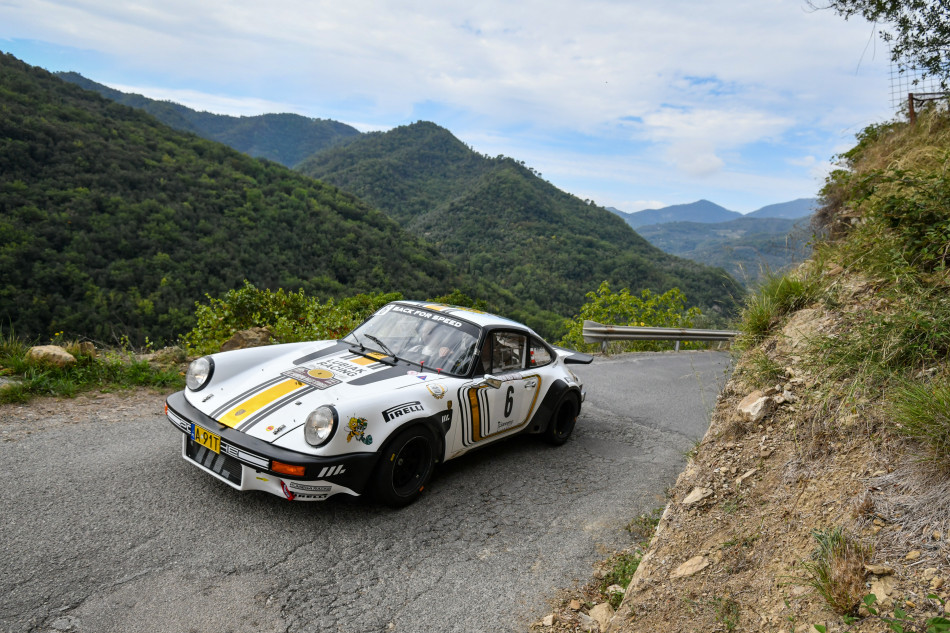
The World Motor Sport Council approved a series of updates to Appendix K as part of the FIA’s ongoing work to clarify the regulations and support technical compliance across historic motor sport.
The main technical changes include:
-
The introduction of a rev limit for Period F cars.
-
The introduction of a size limit for anti-roll bars on cars up to Period H2.
Both updates are aligned with the objectives of the FIA Roadmap for Technical Compliance.
Further amendments and clarifications have also been made to Appendix K throughout the year. Competitors are encouraged to familiarise themselves with the latest requirements as soon as the revised Appendix K is published.
The Fédération Internationale de l’Automobile (FIA) is the governing body for world motor sport and the federation for mobility organisations globally. It is a non-profit organisation committed to driving innovation and championing safety, sustainability and equality across motor sport and mobility.
Founded in 1904, with offices in Paris, London and Geneva, the FIA brings together 246 Member Organisations across five continents, representing millions of road users, motor sport professionals and volunteers. It develops and enforces regulations for motor sport, including six FIA World Championships, to ensure worldwide competitions are safe and fair for all.
Comments